Choosing the Perfect Blinds Colors for Your Home
The best blinds colors work with your room’s existing finishes and the role you want your windows to play. Start with your walls, trim, and furniture, then compare samples before committing. This approach helps you narrow your blind options without choosing a color that looks appealing online but feels wrong at home.
What color blinds should you choose for your home?
Choose blinds that coordinate with a lasting feature, such as window trim, flooring, or a sofa you plan to keep. For your shortlist, consider a trim-matching neutral, a tone close to your walls, and a contrasting accent. Compare those directions before browsing dozens of individual finishes.
Try these starting points rather than treating any color as a universal winner:
- White or off-white: Compare against your actual trim; avoid assuming every white will match.
- Beige, oatmeal, or taupe: Consider these alongside warm wood, cream upholstery, and earthy textiles.
- Gray or charcoal: Test beside stone, metal, and cooler finishes before deciding.
- Wood tones: Hold samples against flooring and furniture to judge whether you like the combination.
- Muted green or blue: Borrow a color from artwork or a rug if you want a deliberate accent.
You do not need to replace existing blinds with blinds in the same color. Use the replacement as an opportunity to reconsider what belongs in the room.
Build around walls, trim, and textiles
Decide whether you want your indoor window blinds to blend into the background or become part of the decorating scheme. For a quieter starting point, shortlist colors close to the walls or trim. For contrast, try a deeper tone already represented elsewhere, rather than introducing an unrelated color.
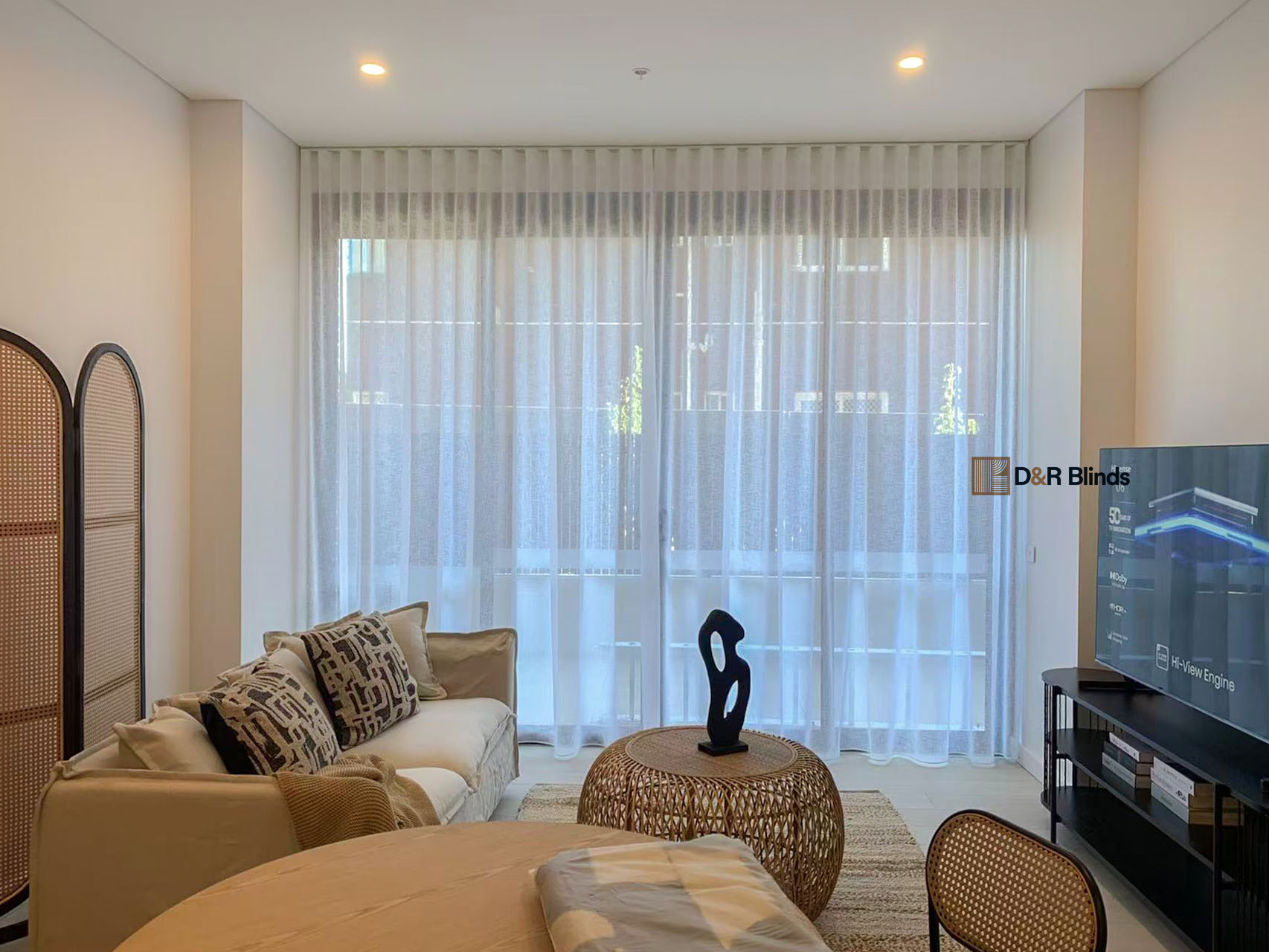
With living room window blinds, place samples beside the sofa fabric and largest rug. For example, you might compare oatmeal against a cream sofa and walnut table, then test muted olive drawn from artwork. This gives each candidate a reason to belong.
If you prefer a window blind and curtain combination, choose the two together. Hunter Douglas suggests coordinating shades and drapes through complementary colors, textures, or contrast. Keep one element understated if you want the other to carry the pattern. (hunterdouglas.com)
How do light and fabric affect your choice?
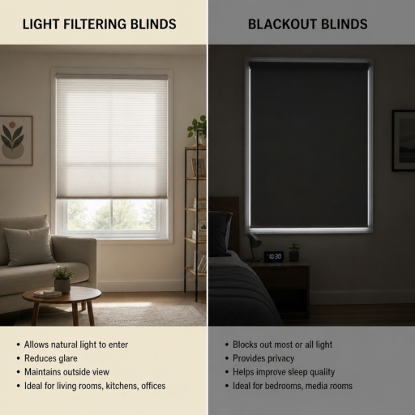
Color alone cannot tell you how much light or privacy a covering provides. Fabric opacity, construction, and additional features also matter, so assess appearance and performance separately. Hunter Douglas distinguishes sheer, semi-sheer, semi-opaque, and opaque fabrics by how much light they transmit and the privacy they offer. (hunterdouglas.com)
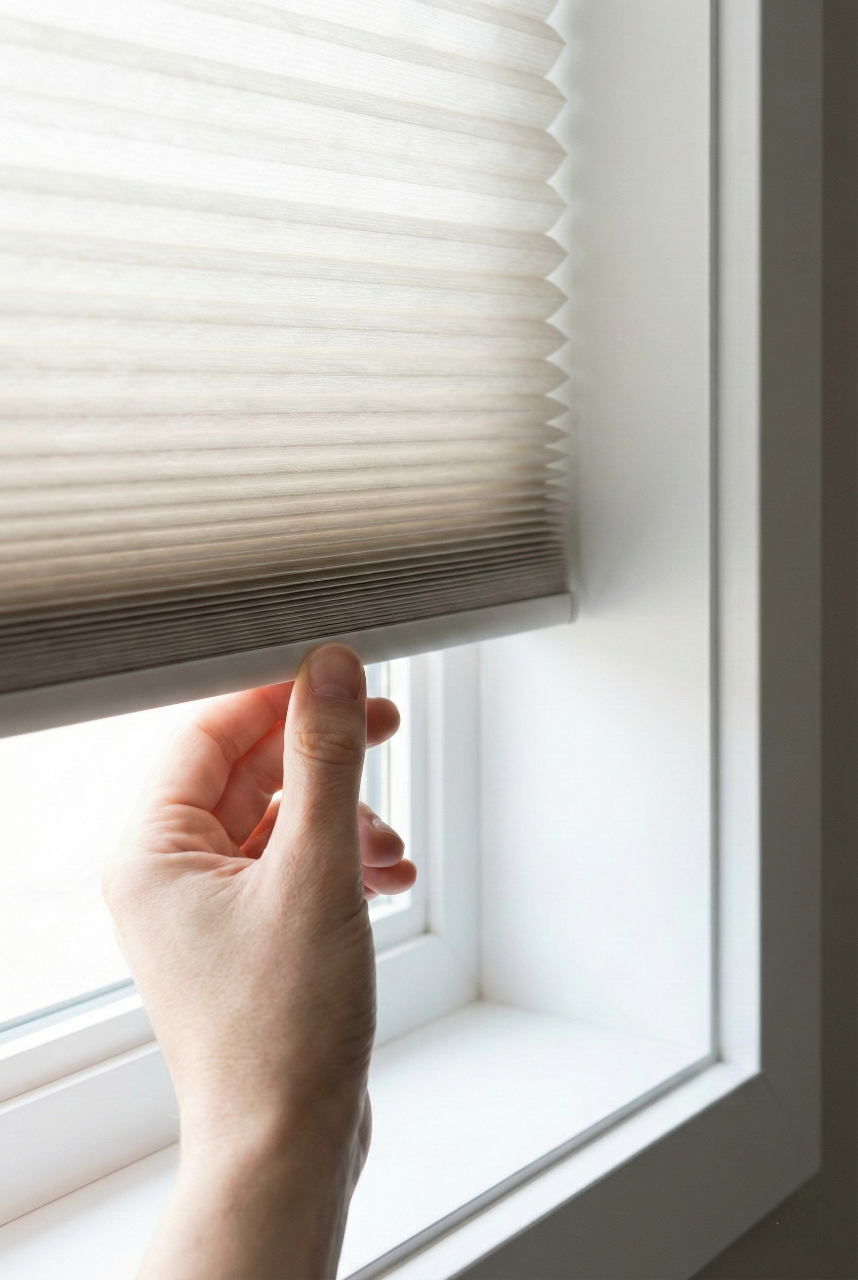
For windows with shades, request samples in the actual fabric and opacity you intend to order. Do not approve a color in one material and assume another will look identical. Blindsgalore recommends physical swatches and notes that natural wood can vary in tone, including between individual slats. (blindsgalore.com)
Test your indoor window shades methodically:
- Hold each sample at the window, beside the frame and wall.
- Revisit it in morning light, afternoon light, and under your evening lamps.
- Compare it with nearby furnishings, not just a paint chip.
- Ask to see the headrail, backing, and hardware finishes before approving the order.
Ask about component coordination, too. An exact color match between every part of a blind or shade is not always possible. (blindsgalore.com)
Match the choice to each room’s routine
For living room window shades, begin by listing what happens there: conversation, reading, television, or all three. If daytime softness and evening darkness both matter, ask about a light-filtering treatment paired with a room-darkening layer. Such combinations are available, but confirm the specific product’s operation before buying. (hunterdouglas.com)
For home office blinds, put screen comfort on the checklist before settling on a fashionable color. Ask suppliers to explain the proposed fabric’s glare control, view-through, and privacy. Solar-shade performance can differ with fabric color, so compare the actual options rather than treating all office blinds alike. (hunterdouglas.com)
In bedrooms, choose your preferred palette alongside your darkness requirements. Room-darkening fabric, liners, and measures that address light gaps deserve separate attention; selecting dark-colored window blinds is not a substitute for checking those features. (hunterdouglas.com)
Give small windows and large openings equal attention
When selecting small window blinds or narrow blinds, take samples to the opening rather than judging them across the room. Try a frame-matching finish first, then a contrasting candidate. For a small blind, assess the visible hardware alongside the fabric or slats.
For large window blinds, request a larger display sample if possible. Review the color across adjoining windows and doors before ordering. If you are comparing horizontal window shades with vertical designs, ask to see how each looks both open and closed.
Treat a door window shade as part of that same plan. Check handle clearance, mounting space, and movement rather than buying on color alone. Inside-mount suitability depends partly on available frame depth, so verify measurements against the selected product’s requirements. (hunterdouglas.com)
Shop with a shortlist, not just a search phrase
Whether you search “blinds near me,” “vertical blinds near me,” or “vertical window blinds near me,” bring measurements, room photographs, and your shortlisted colors. The same preparation applies when browsing window blinds shops through a location-specific search such as “window blinds Sydney.” Ask each blinds shop to quote comparable materials, mounting, and installation.
When comparing ready made blinds or cheap window shades, check fit and the complete cost before deciding. Confirm sizes, alteration options, hardware, returns, and whether samples represent the finished product. Keep your preferred color flexible until those practical details work.
The right blinds and shades should satisfy both your decorating plan and your daily routine. Start with three color directions, test them at the window, and approve the full combination of finish, fabric, fit, and function—not the swatch alone.
Ready to see the difference? 【Click here to explore our BLINDS】 or contact the DR Blinds team today for a free quote. Let's bring the breezy, elegant Sydney style to your home- for less.